
UrbanCentric Innovation
INDEPENDENT RESEARCHER & DESIGNER | THE NEW SCHOOL | SPRING 2020
I asked what makes an innovation work, and for whom, across three time horizons with urban sustainability as the subject. Present, past, and future, run as three studies. What holds them together is that an innovation inherits a history and sets consequences in motion, and both decide who it ends up serving.
PRESENT
Sustainable Fashion Adoption Through Diffusion Dynamics
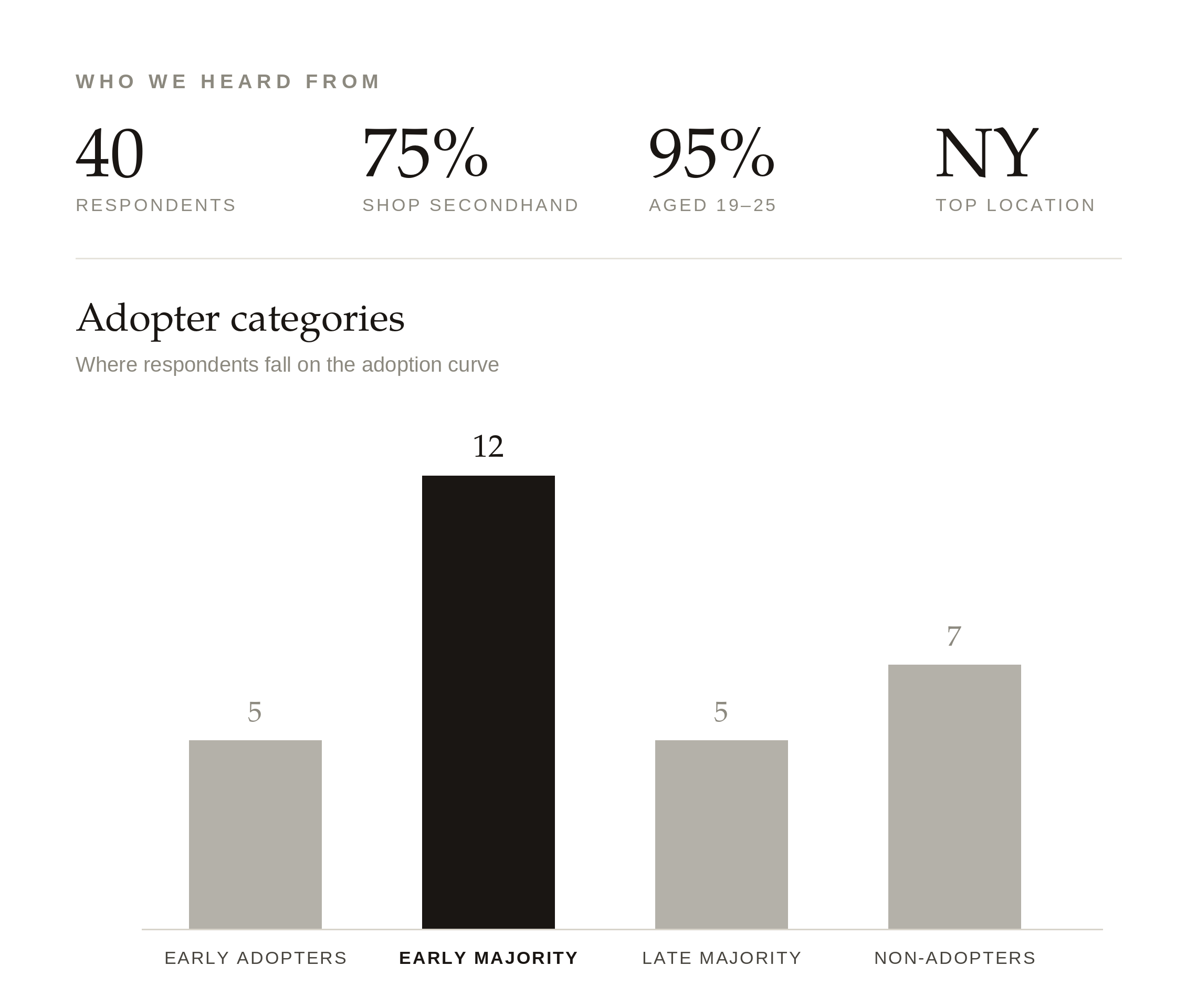
Adopter categories, with descriptive stats consolidated into a sample strip.
OVERVIEW
The secondhand and vintage market has grown fast. This part looked at who is fueling that growth and what moves them, using diffusion of innovation theory to sort shoppers from early adopters through non-adopters.
APPROACH
I grounded the work in a literature review, then built it out through ethnographic observation, interviews, and a survey. Diffusion theory gave me the frame for the adopter categories.
FINDINGS
Location and background did little to predict who shopped secondhand. What separated adopters from non-adopters was motivation. Adopters were pulled in by price, peer influence, and the appeal of finding something no one else had, more than by sustainability itself. Non-adopters pointed to a preference for new items and past secondhand purchases they had been disappointed by.
REFLECTION
Sustainability as a message does most of its work on people already inclined toward it. Reaching the next wave means leading with price and discovery, and letting the sustainability benefit follow.
PAST
Mapping the Legacy of Urban Sustainability
OVERVIEW
This part takes Studio Nab's Urban Vertical Farm and traces the long history of ideas it stands on, from the Hanging Gardens of Babylon and Aztec chinampas to the coining of the word "hydroponics" and the invention of the passenger elevator.
DESIGN & INSIGHTS
The hard part was density. Turning hundreds of scattered developments into something a viewer could read meant testing layout after layout. The final radial map centers on Studio Nab and arranges its influences by theme along spokes, with time reading outward. One glance shows how many separate histories the vertical farm is standing on.
FUTURE
Designing New Brooklyn, a 2045 Forest City
OVERVIEW
Set in 2045, this part imagines New Brooklyn: a forest city built entirely around sustainability, wrapped in vegetation and running on renewable energy. Forest cities answer real environmental problems, but to sustain themselves they cap population. The design follows that tension. A city that wins on the environment can still lose on who gets to live there.
DESIGN & THE ARTIFACT
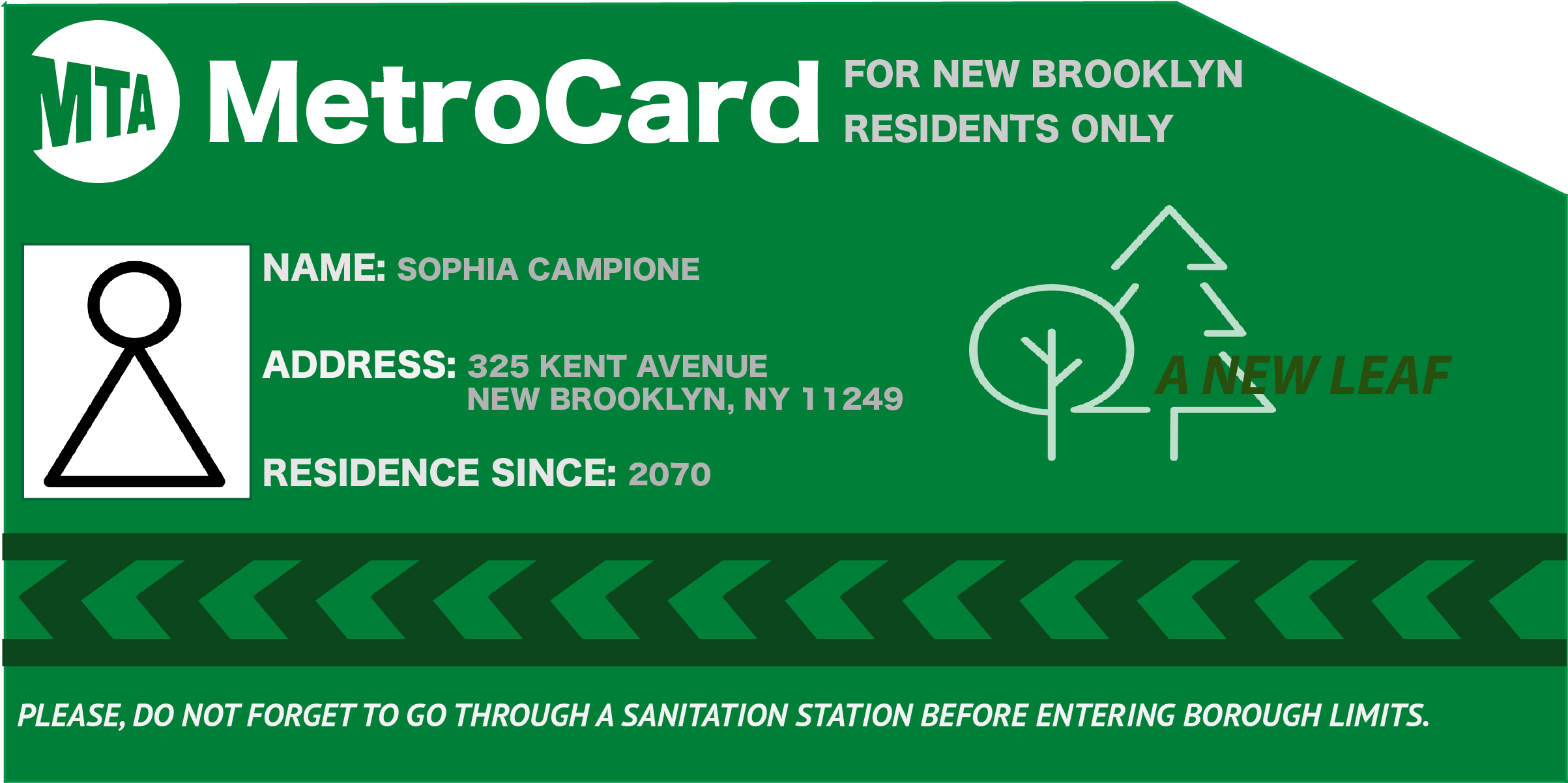
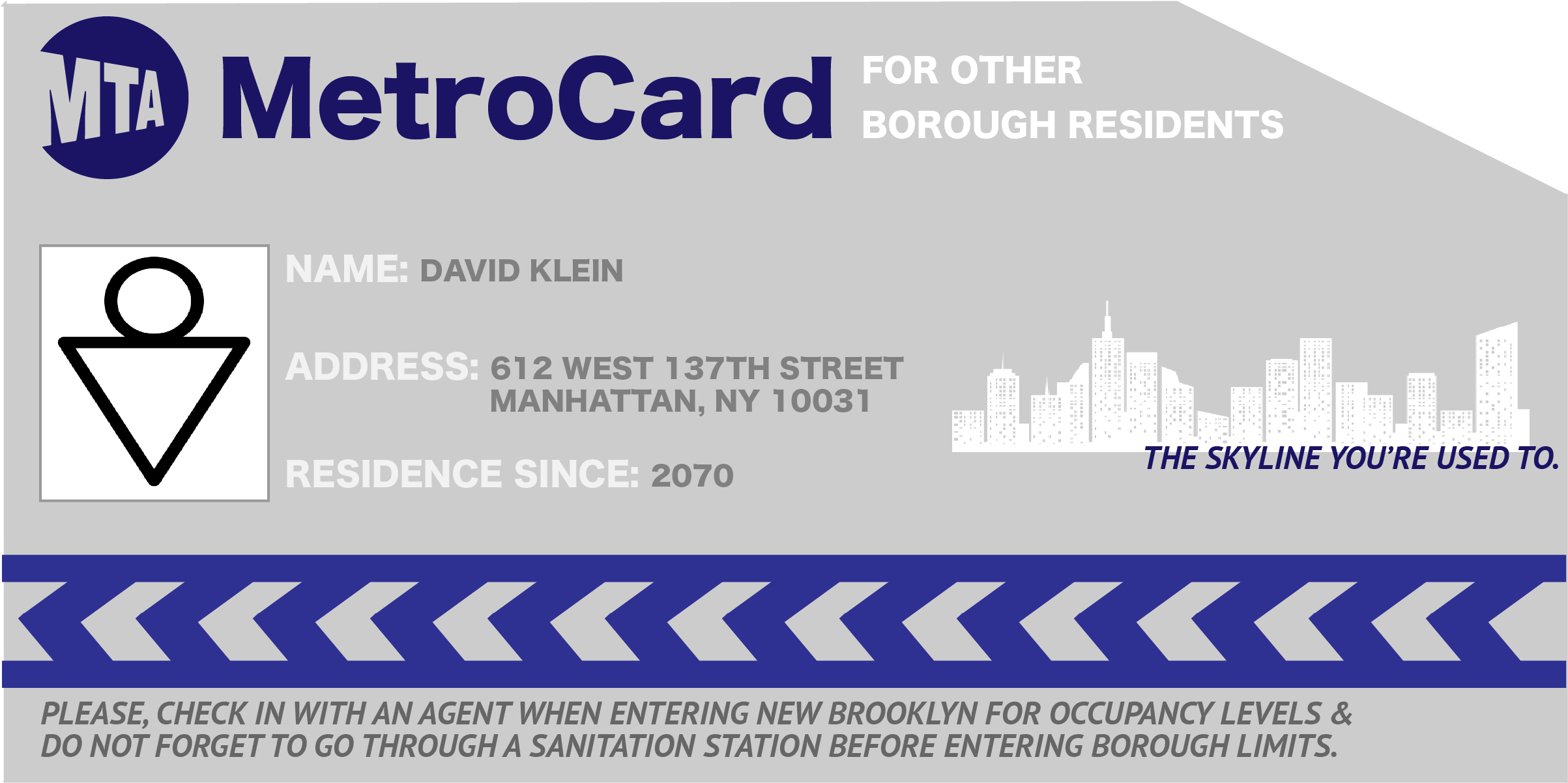
I designed two transit cards, one for New Brooklyn residents and one for everyone else. Residents carry a green card, "A New Leaf." Non-residents carry a grey card and face extra check-ins at the border. Held side by side, the two show how the city manages its own sustainability, which is by controlling who is let in.
Ethnography in the present, systems mapping of the past, speculative design of the future. I still use all three.
in·no·va·tion noun
Designing the right solution, for the right people, at the right time. Grounded in the past so the future benefits from its use rather than suffering its disruption. Built on human-centered principles, with attention to consequences at every phase of the work.